
Dreaming about a Tahoe home where the pace feels slower and the streets feel more tucked away? If you are drawn to a quieter side of the South Shore, Christmas Valley deserves a close look. This guide will help you understand what makes the area feel more secluded, what kinds of homes you may find, and what practical issues matter most before you buy. Let’s dive in.
Christmas Valley sits in the south-shore Tahoe Basin south of Meyers, stretching from the Highway 50 and Highway 89 junction to the base of the Luther Pass grade. According to TRPA, the area is primarily residential, with single-family dwellings as the main land use, plus one condominium development and a few scattered duplexes. The plan area is also about 50 percent built out, which helps explain why it often feels less dense than busier parts of South Shore.
That lower-density pattern matters if you are shopping for a mountain retreat. In practical terms, you are looking at a setting with fewer commercial uses and more residential spacing. If your goal is a home base that feels separate from the tourist core, Christmas Valley lines up well with that lifestyle.
A quiet setting does not mean being cut off from essentials. For most day-to-day needs, Christmas Valley buyers look to nearby Meyers, which El Dorado County describes as a walkable mountain community with year-round recreation and a diverse commercial and retail environment. That gives you access to errands, food, fuel, and services without living in a more built-up area.
This balance is part of the appeal. You can have a retreat-like feel at home while still staying connected to nearby conveniences. For many buyers, especially second-home shoppers, that mix is exactly what makes the area stand out.
Christmas Valley does not offer one uniform housing type. Recent listing examples point to a classic Tahoe mix that includes chalets, A-frames, gambrel-style cabins, split-level mountain homes, and remodeled cabins. That variety gives you more than one path to a quiet retreat, whether you want something compact and simple or a larger home with extra room for guests.
The size range in recent examples is broad as well. Some homes are around 600 to 1,100 square feet, while others are above 1,500 square feet and up to roughly 2,300 square feet. These examples are not a formal neighborhood average, but they are helpful for setting realistic expectations as you start your search.
TRPA also notes that the area includes a condominium development and a few duplexes. So while detached cabins are common, they are not your only option. If you want lower-maintenance ownership, it is worth keeping an open mind.
One of the biggest mistakes buyers make in Tahoe is assuming every street has the same lot pattern. In Christmas Valley, recent parcel examples range from about 7,393 square feet to 70,914 square feet, with many examples falling roughly between 10,000 and 50,000 square feet. That is a wide spread for one neighborhood area.
What does that mean for you? Privacy, usable outdoor space, snow storage, and future improvement potential can vary a lot from property to property. Two homes that feel similar online may sit on parcels with very different constraints and possibilities.
If your version of Tahoe includes easy access to trails and open space, Christmas Valley has a strong case. The Tahoe Rim Trail includes south-side access and seasonal trail connectivity for hiking, equestrians, and mountain biking in many areas. Kirkwood also offers winter and summer recreation, including skiing, snowboarding, hiking, biking, and cross-country activities.
Closer to home, Meyers adds mountain-oriented amenities like Tahoe Paradise Park and the reopened Tahoe Pines property with an accessible trail to the Upper Truckee River, picnic tables, and bicycle parking. The result is a lifestyle that feels rooted in nature rather than centered on heavy visitor traffic. You are close to major recreation, but not living in the middle of the busiest activity zones.
For many buyers, especially out-of-area buyers, one of the first questions is whether a mountain neighborhood is served by public utilities. South Tahoe Public Utility District states that its service area includes portions of El Dorado County in the Tahoe Basin, with boundaries running on Highway 89 south to Luther Pass. The district provides drinking water and wastewater service in the area.
That is reassuring, but you should still verify connection status for any specific parcel before closing. Utility service may be generally available in the area, but property-level details still matter. In mountain markets, assumptions can create expensive surprises.
Mobility options are also limited but not nonexistent. El Dorado County notes that Tahoe Transportation District paratransit is available within the South Lake Tahoe sphere of influence and can serve Meyers, Christmas Valley, and nearby communities. This is not the same as robust daily transit, but it does provide some reservation-based support for residents who need it.
A quiet mountain retreat can be deeply rewarding, but it comes with real responsibilities. In Christmas Valley, the biggest practical tradeoffs are wildfire readiness, winterization, and parcel-specific due diligence. These are not side issues in Tahoe. They are central to smart ownership.
El Dorado County identifies wildfire risk reduction as a major county priority, including defensible space enforcement, fuel breaks, prescribed fire, local fire-hazard reduction, evacuation planning, and updated wildfire plans. The county also notes that Lake Valley Fire Protection District serves neighborhoods around Christmas Valley and the south-shore unincorporated Tahoe Basin.
Lake Valley Fire provides fire suppression, emergency medical services, wildfire prevention, defensible-space inspections, fire-hazard tree marking, and vacation-home-rental inspections. For buyers, this means wildfire readiness should be part of your decision from day one. You are not just buying a home. You are taking on a year-round maintenance and preparedness plan.
Tahoe winters are part of the dream, but they also require planning. South Tahoe Public Utility District warns that winter temperatures can drop below freezing and into single digits. The district recommends steps like draining hoses, insulating exposed pipes, sealing exterior openings, winterizing irrigation, and keeping contact information current in case of emergencies.
If you are buying a second home, this is especially important. A vacant home in winter needs active oversight. Reliable systems, seasonal prep, and a local support network can make a major difference.
In Tahoe, one address can be very different from the next. El Dorado County says official lot size and physical property details should be confirmed through recorded documents and county research tools. Parcel Tracker can also provide information such as lot size, land capability, development rights, BMP and source-control status, and deed-restriction information.
This matters because TRPA notes that Christmas Valley includes high-hazard land, stream-environment-zone land, and lower-hazard residential areas. So if you are thinking about expansion, coverage, site improvements, or long-term flexibility, parcel-level review is essential. A home that feels perfect at first glance may come with limitations that are not obvious in photos.
Christmas Valley tends to fit buyers who want a more tucked-away Tahoe experience. You may be looking for a second home where you can unplug, spend time outdoors, and avoid the busier feel of the tourist core. You may also be a primary-home buyer who values a residential setting with access to Meyers and the broader South Shore.
The area can work well if you are comfortable trading a more central location for a quieter atmosphere. It may be less ideal if you want to be in the middle of shops, nightlife, or dense service corridors. The right fit comes down to how you want your day-to-day Tahoe life to feel.
If you are serious about buying here, a focused search strategy helps. Start with the setting you want, then evaluate each property through the lens of access, maintenance, and parcel specifics.
A smart buyer checklist includes:
These steps can help you avoid buying the wrong kind of quiet retreat. In Tahoe, the best purchase is not always the prettiest listing. It is the property that matches your lifestyle, risk tolerance, and long-term plans.
If you are considering Christmas Valley, it helps to work with a team that understands how neighborhood character and parcel details shape the buying decision. A calm, informed approach can make the process much smoother and help you focus on homes that truly fit your goals. When you are ready to explore cabins, chalets, condos, or larger mountain homes in this part of the South Shore, connect with Jill & Pamela for local guidance tailored to your Tahoe search.
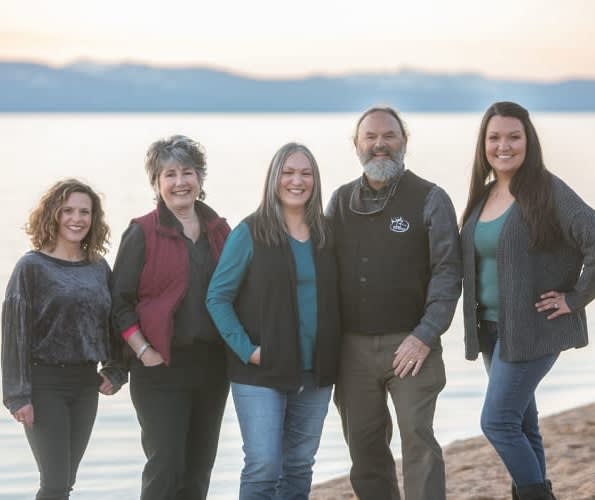
SoTahoe Team
We serve clients in California and
Nevada, forging lasting relationships
built on trust and integrity.
Office Information
2028 Lake Tahoe Blvd.,
South Lake Tahoe, CA 96150